
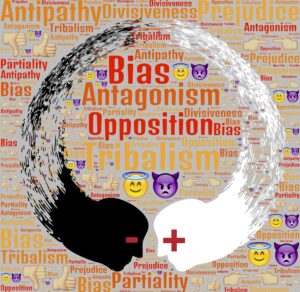
 The issue of bias has become an important element in the work of change and growth in the EDI arena. Bias training has received mixed reviews in terms of its effectiveness. Some bias training has seemed to cause some people to dig their heels in and become more entrenched in far too many cases.
The development of biases was created by the human mind as a safety mechanism. A form of protection and survival. Therefore, some of our biases are far more necessary than others. Less important biases could be seen as those that fall into the category of preference. Things we’re drawn to over others because for whatever reason we like them more, or from a purely mercenary perspective, it benefits us better.
We all have biases. They can and have become so deep-rooted that they influence us without us realising it.
A United Nations report in March 2020 found that ‘close to nine out of 10 men and women around the world hold some sort of bias against women’. These findings are quite loaded and might even make someone like me who works in the EDI arena feel a little discouraged. It’s not like there hasn’t been much done to highlight the imbalance in gender pay and opportunity. Clearly, there is still much to be done.
But the powerful truth about these report findings, as an example of bias is that it states that both men and women have a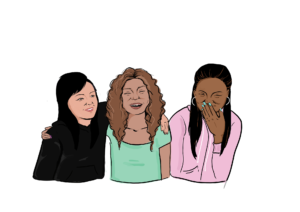 bias against women. Would a woman want to admit that she might have a bias against women? Probably not.
However, part of the inequality we’re dealing with finds its root in our biases. It is our biases that derail our intentions in some cases. And this is because our biases exist on two levels. Those that are conscious and those that are not. Our unconscious biases are, oblivious to us. We don’t know or cannot recognise our biases when they are in use by us or through us. Therefore, we do not comprehend when our decision-making is coming from a place of bias. And hence the issue.
That level of discouragement I mentioned above can come back to raise its not-so-pleasant head. Or in some cases, for those who really don’t wish to learn more about themselves, the fact of level two, the unconscious biases, can be used as an excuse not to pay attention and change. I’ve heard people say, ‘Well I don’t know, it’s unconscious so there’s nothing I can do about it.’
Resistance to change varies from person to person and from time to time at different stages in our lives. The truth is that unless we have a motive or a reason to change we all tend to resist change. Add to that the whole idea of admitting we might not be perfect or have anything but a proper attitude or approach to someone else, which is hard for most of us to accept.
I believe that organisations have a responsibility to push for change within their culture and workplace, and this means really looking at organisational bias as well as individual bias. How they do this is varied, but it must start by including EDI and in particular inclusive leadership that is not afraid to drill down to the core of the decisions being made daily by managers, and it must be included in the business’s strategic objectives.
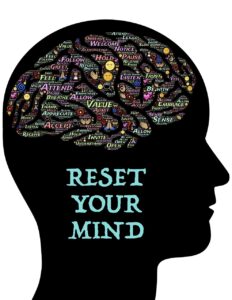 The truth is that we can learn to recognise our biases. We have to be open to accepting that
- We all have biases, and most are deeply hidden.
- We need to be prepared to honestly reflect on the decisions we make each day
- We need to identify the true underlying why of our decisions
- We all need objective help to do this
- Then accept and take responsibility for changing our attitude and approach
- Be open to learning from the perspectives and the lived experiences of others.
Our unconscious biases may be hidden but we can find them if we really want to. And finding them in ourselves creates better and more inclusive leadership.

Leave a Reply
You must be logged in to post a comment.